
Super App & SDK
Written by Jacinthe Busson, Co-founder & CPO at Fastory, based on her research and observations on mobile ecosystems, UX and Super Apps.
Sports organisations already have many of the ingredients required to build Super App-like ecosystems.
Tickets.
Content.
Live scores.
Merchandise.
Loyalty.
Membership.
Games.
Predictions.
Rewards.
Stadium services.
Partner offers.
Community.
Yet these experiences are often fragmented.
One service lives inside the club app.
Another sits on the website.
Ticketing opens a third-party platform.
Merchandise lives somewhere else.
Loyalty requires another account.
Fan games appear only during campaigns.
Membership exists in a separate environment.
The fan does not experience an ecosystem.
They experience a collection of disconnected services around the same relationship.
This raises an interesting question:
Could sports organisations evolve their mobile apps into Super Apps built around the fan?
Not by recreating WeChat.
Not by adding every possible feature to one interface.
But by applying the architectural principles we have explored throughout this series:
shared identity;
modular services;
gamification;
payments;
loyalty;
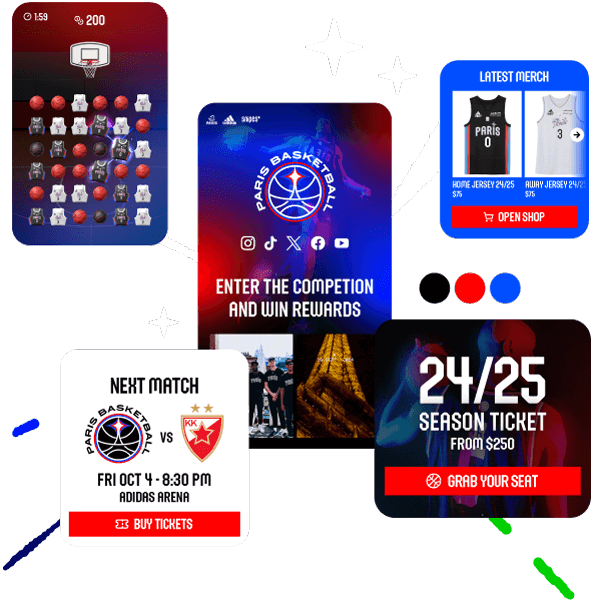
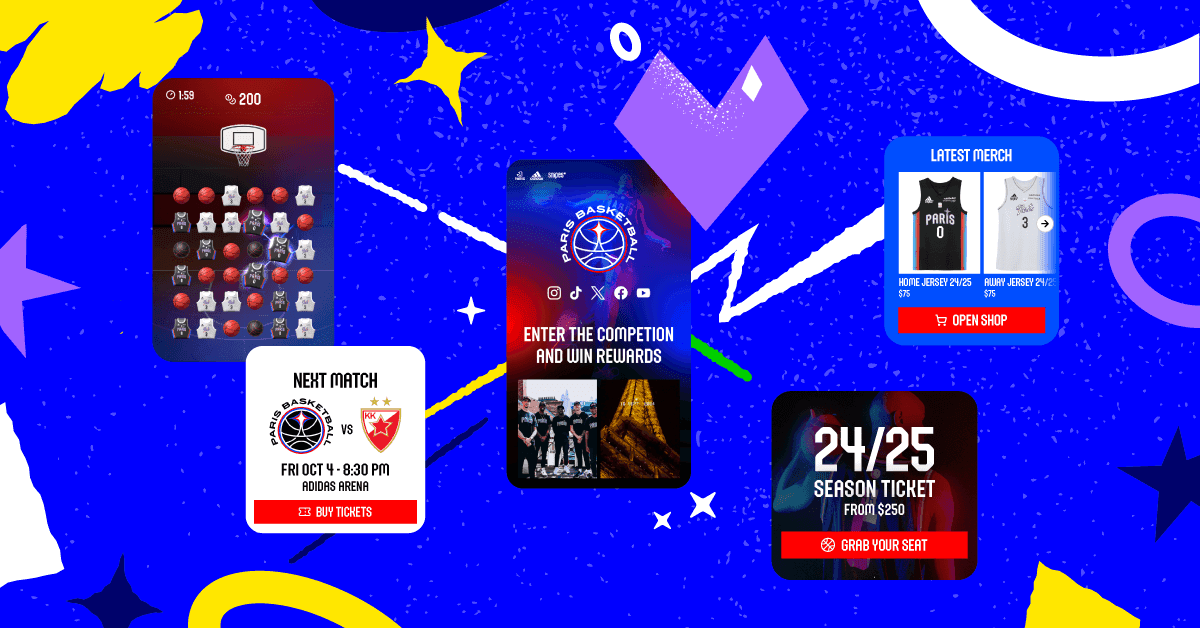
embedded experiences;
APIs;
SDKs;
and continuity across the fan journey.
The sports industry may be particularly well suited to this model because one relationship already connects everything:
fandom.
Sports already behaves like an ecosystem
A football club is not simply a content publisher.
A basketball team is not simply an event organiser.
A league is not simply a competition.
For the fan, the relationship can include:
watching;
attending;
following;
buying;
playing;
predicting;
sharing;
travelling;
collecting;
supporting;
belonging.
These behaviours already form an ecosystem.
The digital problem is that the infrastructure rarely reflects it.
A fan can be the same person in several systems and still appear as several different users.
One identity in ticketing.
Another in ecommerce.
Another in the app.
Another in the CRM.
Another in a loyalty platform.
Another in a fan game.
From the user's perspective, this creates friction.
From the organisation's perspective, it creates fragmentation.
The Super App model offers another way to think about this problem:
organise services around the fan rather than around internal systems.
The official sports app is often still a content app
Many sports mobile applications still follow a relatively traditional structure.
News.
Fixtures.
Results.
Statistics.
Videos.
Notifications.
Perhaps tickets and merchandise.
These services are useful.
But they often reproduce what already exists on the website.
The application becomes a smaller distribution channel for existing content rather than a distinct mobile ecosystem.
This misses part of what makes mobile powerful.
As explored in Why China Became Mobile-First, mobile-native thinking begins with another question:
What becomes possible when the smartphone is the fan's primary digital interface?
The answer goes far beyond content.
The smartphone can know identity.
Store tickets.
Trigger payments.
Scan QR codes.
Deliver rewards.
Connect stadium locations.
Run games.
Authenticate membership.
Receive personalised messages.
Access exclusive content.
Interact with sponsors.
And potentially orchestrate many of these services inside the same experience.
At that point, the app begins to look less like a media channel.
It starts looking like fan infrastructure.
Sports has the same fragmentation problem Super Apps were designed to solve
Consider a typical matchday.
A fan may:
open a ticketing app;
use a wallet to enter the stadium;
open the club app for team news;
scan a QR code for a sponsor activation;
use a browser to order food;
visit an ecommerce site for merchandise;
participate in a poll;
receive an email about loyalty points;
then use another platform to access post-match content.
Each individual experience may work.
But the overall journey is disconnected.
This is exactly the type of problem we explored in The Power of Instantaneity.
Every transition introduces friction.
Another login.
Another interface.
Another redirect.
Another account.
Another context switch.
The opportunity for sports organisations is therefore not simply to add more digital features.
It is to reduce the distance between the experiences fans already use.
A sports Super App does not need to do everything
This distinction is essential.
A sports Super App should not become a gigantic application with fifty permanent tabs.
That would create another form of complexity.
The better model is closer to the architecture described in Mini Programs: The Architecture Behind Super Apps.
The core application provides the environment.
Identity.
Navigation.
Design system.
Permissions.
Data.
Notifications.
Perhaps payments and loyalty.
Then specialised services can operate as modules.
Ticketing.
Games.
Commerce.
Stadium ordering.
Predictions.
Rewards.
Partner activations.
Membership.
Live experiences.
The user experiences continuity.
But the technical services behind the interface can remain modular.
This is the key idea:
integration does not require monolithic software.
Identity is probably the real starting point
Before gamification.
Before commerce.
Before AI.
Before personalisation.
A sports Super App needs to know who the fan is.
Without identity, every digital interaction starts again.
The user signs in here.
Registers there.
Provides their email again.
Creates another profile.
Their behaviour remains fragmented across systems.
A shared identity layer changes this.
The fan can move through:
ticketing;
content;
membership;
loyalty;
commerce;
games;
and stadium services
while remaining the same person across the ecosystem.
This is why Single Sign-On is more strategically important than it may initially appear.
SSO is not merely a login convenience.
It is the foundation for continuity.
Loyalty can become the connective tissue
Once identity exists, loyalty can connect previously separate behaviours.
Traditional sports loyalty programmes often focus on transactions.
Buy a ticket.
Earn points.
Buy merchandise.
Earn points.
But fandom contains much more value than spending alone.
A fan may:
attend matches;
watch content;
answer polls;
make predictions;
refer friends;
visit the stadium;
participate in sponsor activations;
complete challenges;
purchase merchandise;
renew membership;
travel to away games.
A connected fan ecosystem can recognise more of these behaviours.
This changes loyalty from:
a purchase reward system
into:
a relationship system.
And this is where the lessons from Gamification: The Hidden Engagement Engine Behind Alipay become particularly relevant.
Progress.
Status.
Rewards.
Missions.
Collections.
Achievements.
Levels.
These mechanics can create continuity between interactions that would otherwise have no relationship with one another.
The fan profile can become persistent
Imagine a supporter opening the club app.
They are not simply a user.
They have a status.
Perhaps:
Free.
Premium.
Gold.
They have points.
Achievements.
Attendance history.
Membership benefits.
Unlocked rewards.
Partner privileges.
Game participation.
Merchandise purchases.
The profile becomes a representation of the relationship between the fan and the organisation.
That creates a fundamentally different experience from a conventional content application.
The app no longer says:
Here is today's news.
It says:
Here is your relationship with the club.
That is much closer to Super App thinking.
Membership can become more than access
Membership is another natural layer.
Sports organisations already create differentiated relationships with supporters.
Season-ticket holders.
Members.
Premium subscribers.
VIP guests.
Supporters' clubs.
Digital members.
These statuses often exist independently from the mobile experience.
A Super App model can bring them into the same interface.
A fan's membership level could determine:
access to content;
ticket priorities;
partner offers;
rewards;
exclusive experiences;
commerce benefits;
games;
hospitality access;
or digital privileges.
The mobile app becomes the visible expression of status inside the ecosystem.
This creates a more understandable value proposition for membership.
Instead of purchasing an abstract subscription, the fan sees exactly what their status unlocks.
Gamification can connect matchdays with the rest of the year
Sports has a natural engagement problem.
Attention peaks around events.
Before the match.
During the match.
Immediately after the match.
Then it falls.
The traditional response is more content.
More videos.
More social posts.
More notifications.
Gamification offers another approach.
Predict the score.
Select the starting line-up.
Vote for the player of the match.
Complete a quiz.
Unlock an achievement.
Climb a leaderboard.
Collect points.
Participate in a challenge.
Claim a reward.
These interactions create active participation rather than passive consumption.
More importantly, a persistent system can connect matchdays.
A correct prediction today affects status tomorrow.
Attendance contributes to progress.
A sponsor activation generates points.
A challenge continues across several fixtures.
The relationship persists between events.
That is where gamification becomes more than a campaign.
It becomes infrastructure for fan engagement.
The stadium creates a physical layer for the ecosystem
Sports has another advantage that many digital products do not have:
a physical environment.
The stadium.
This creates opportunities for interactions connected to context.
Entry gates.
Seats.
Concourse areas.
Food and beverage.
Hospitality.
Retail.
Screens.
Sponsor installations.
Fan zones.
QR codes can turn these physical spaces into digital entry points.
As explored in How QR Codes Changed Mobile Payments in China, a QR code can effectively make the physical environment clickable.
At a stadium, that might mean:
Scan → Vote
Scan → Play
Scan → Order
Scan → Claim
Scan → Join
Scan → Unlock
The experience becomes particularly powerful when the QR destination already knows the user's identity and status.
A Gold member can receive one experience.
A first-time visitor another.
A season-ticket holder another.
The same physical trigger can lead to different digital experiences.
Commerce can become contextual
Commerce is often treated as a separate tab.
Shop.
Browse merchandise.
Checkout.
But inside a broader ecosystem, commerce can become contextual.
A player scores.
A limited product becomes available.
A fan completes a challenge.
A reward unlocks merchandise.
A membership level provides a discount.
A stadium seat becomes an entry point to food ordering.
A sponsor activation generates a coupon.
The commerce experience is connected to what the fan is doing at that moment.
This creates a different relationship between engagement and revenue.
Instead of:
content → advertisement → shop
the ecosystem can support:
interaction → context → relevant offer
The distinction matters.
When commerce is integrated naturally into the journey, it can feel like part of the service rather than an interruption.
Sponsors can become services, not banners
Sports sponsorship has traditionally been highly visual.
Logo placement.
LED boards.
Jerseys.
Hospitality.
Digital banners.
But mobile ecosystems allow sponsors to participate differently.
A partner can provide:
rewards;
privileges;
games;
exclusive content;
discounts;
products;
experiences;
or services.
This shifts sponsorship from:
visibility
towards:
utility and interaction.
A banking partner could provide a benefit.
A mobility partner could improve the journey to the venue.
A food brand could sponsor a game.
A retailer could provide rewards.
A travel partner could support away-game experiences.
The sponsor becomes part of the ecosystem rather than an advertisement displayed around it.
This can also create more measurable forms of engagement.
The data model changes too
Fragmented experiences create fragmented data.
The ticketing system knows attendance.
The ecommerce platform knows purchases.
The game platform knows participation.
The CRM knows communication history.
The loyalty system knows points.
When these systems are connected through a shared fan identity, another possibility appears:
a unified understanding of engagement.
This does not mean collecting everything simply because it is technically possible.
Consent, transparency, data minimisation and privacy remain essential.
But it can allow sports organisations to move beyond simplistic metrics such as:
app downloads;
page views;
email opens;
social followers.
A more useful question becomes:
How does this fan actually interact with the organisation across the entire relationship?
That can improve personalisation.
But it can also improve product design.
Personalisation becomes contextual
Personalisation in sports is often limited to content.
Favourite team.
Favourite player.
Preferred language.
But a connected ecosystem creates richer forms of context.
A season-ticket holder attending the stadium has different needs from an international fan following remotely.
A first-time visitor has different needs from someone who has attended fifty matches.
A Premium member should not necessarily see the same benefits as a free user.
A supporter who frequently participates in games might value challenges more than merchandise.
The interface can therefore adapt based on:
identity;
status;
location;
behaviour;
membership;
event context;
and preferences.
The goal is not to create an algorithmically overwhelming experience.
It is to reduce irrelevant choices.
Personalisation should remove noise.
The fan journey extends far beyond matchday
One of the biggest opportunities is to stop thinking about digital fan engagement only around live events.
The relationship exists:
before the season;
during the season;
between fixtures;
during transfer windows;
while travelling;
during international competitions;
during the off-season.
This is why industry platforms increasingly describe fan engagement as a year-round relationship rather than a set of matchday campaigns. Current fan-engagement platforms commonly combine content, loyalty, gamification, ticketing, commerce and identity within the same broader proposition.
The Super App model fits this reality particularly well.
The app becomes useful for different reasons at different moments.
That is the same idea we observed with Alipay.
Today, payment.
Tomorrow, travel.
Later, another service.
In sports:
Today, tickets.
Tomorrow, predictions.
Matchday, access and ordering.
Next week, loyalty.
Off-season, content and rewards.
The use case changes.
The relationship remains.
The strongest sports Super App may be vertical
In Uber, Airbnb, Revolut: Are Super Apps Finally Coming to the West?, we explored the idea of the vertical Super App.
This may be the most relevant model for sports.
A football club does not need to provide banking, healthcare and food delivery across a user's entire life.
It needs to organise the services that matter inside the fan relationship.
That boundary is already large enough.
Content.
Membership.
Tickets.
Commerce.
Loyalty.
Games.
Stadium services.
Partner offers.
Community.
Travel.
Rewards.
This is precisely why sports may be a natural candidate for vertical Super Apps.
The domain is narrower than WeChat.
But the relationship is deep enough to support many connected services.
The industry is already moving in this direction
The terminology varies.
Fan engagement platform.
Club app.
Fan ecosystem.
Digital membership platform.
Loyalty platform.
Fan Super App.
But the underlying convergence is visible.
Current sports platforms already combine elements such as:
native apps;
SSO;
CRM;
ticketing;
commerce;
gamification;
loyalty;
rewards;
fan profiles;
and partner experiences.
For example, bfan describes a mobile-first club platform integrating SSO, CRM, ticketing, loyalty and gamification. Fanisko explicitly markets an all-in-one Fan Super App available as an app or SDK. Other platforms describe fan engagement across ticketing, commerce, loyalty, membership and fan identity.
This does not mean the industry has converged on one standard.
It means the problem is increasingly being defined at ecosystem level.
SDKs change the build-versus-buy question
This is where SDKs become strategically important.
A sports organisation may already have an app.
Millions may already have downloaded it.
The brand may already have invested heavily in:
authentication;
design;
content;
ticketing;
analytics;
notifications.
Replacing that application simply to add new engagement capabilities can be unnecessary and expensive.
An SDK offers another model.
Instead of:
replace the app
the organisation can potentially:
extend the app.
An SDK can provide reusable capabilities that operate inside the existing native application.
Games.
Engagement modules.
Rewards.
Profiles.
Commerce experiences.
Content.
Authentication bridges.
Analytics.
The exact capabilities depend on the technology.
But the strategic logic is important.
The existing app becomes the host.
This is conceptually close to the Mini Program architecture explored earlier.
SDK does not mean Super App
This distinction needs to remain clear.
Adding an SDK does not automatically turn a sports app into a Super App.
A Super App requires more than technology.
It requires:
product architecture;
identity;
service integration;
governance;
data strategy;
navigation;
design consistency;
and a reason for the services to belong together.
An app containing fifteen disconnected SDKs can still provide a terrible experience.
The objective is not technical accumulation.
It is orchestration.
The user should experience one ecosystem even if many systems are operating behind it.
Embedded experiences can protect continuity
One of the biggest advantages of embedded experiences is that fans do not necessarily have to leave the application.
Consider a prediction game.
The traditional journey might be:
push notification;
web browser;
campaign landing page;
cookie banner;
registration;
form;
submission;
return to app.
An embedded experience can potentially become:
notification → game → result → points → continue
The technology disappears.
The interaction stays connected to the surrounding fan journey.
This is exactly the principle discussed throughout this series:
move complexity away from the user.
The biggest risk is feature accumulation
There is a danger in the Super App concept.
Once product teams start thinking in ecosystems, every service can appear relevant.
Add tickets.
Add shopping.
Add games.
Add chat.
Add video.
Add fantasy.
Add payments.
Add partner offers.
Add travel.
Add everything.
The result can become unusable.
A sports Super App therefore needs a strong product hierarchy.
The most important question is not:
What can we add?
It is:
What does this fan need here, now?
Matchday.
Home.
Away.
Before the event.
During the event.
After the event.
Off-season.
Free member.
Premium member.
First-time user.
International supporter.
Context should determine visibility.
The best Super App may contain many services while showing relatively few at any one moment.
AI may eventually become the orchestration layer
This is where AI may become particularly important.
As explored in When Seamless UX Becomes Governance: AI Inside Alipay, AI can reduce the need for users to manually navigate complex ecosystems.
Imagine asking a club app:
“What time should I leave for the match?”
The system could potentially understand:
the ticket;
stadium;
kick-off time;
transport;
weather;
entry gate;
membership status.
Or:
“What benefits do I still have this month?”
The answer could combine:
membership;
partner privileges;
rewards;
points;
offers.
Or:
“Can I still order food to my seat?”
The application could connect location, stadium services and payment.
This is where the Super App eventually moves from:
service catalogue
to:
fan assistant.
But as with other industries, this introduces governance questions around data, permissions and automated decisions.
Engagement should not mean permanent stimulation
There is another important limit.
Sports organisations already benefit from strong emotional relationships.
That makes gamification powerful.
It also creates responsibility.
A fan should not need constant notifications, artificial scarcity and endless rewards to remain a fan.
The objective should not be to manufacture emotional dependency.
The best digital ecosystem should strengthen the relationship that already exists.
Help the supporter participate.
Access.
Discover.
Express themselves.
Receive recognition.
Find useful services.
Feel part of the community.
Technology should organise fandom, not replace it.
Clubs should not copy WeChat
The lesson from Chinese Super Apps is not:
build a sports WeChat.
The context is entirely different.
The useful lessons are architectural.
Reduce fragmentation.
Build around shared identity.
Make payment and loyalty reusable.
Connect physical and digital contexts.
Allow modular services.
Reduce unnecessary downloads.
Create persistent engagement.
Use APIs and SDKs to integrate rather than rebuild.
Personalise through context.
Move complexity away from the user.
These principles are transferable.
The exact interface is not.
A sports Super App is really a fan operating system
The term "Super App" can easily become marketing language.
But there is a useful way to define the concept in sports.
A sports Super App is not simply:
an app with content, tickets and games.
It is:
a mobile ecosystem that organises multiple services around a persistent fan identity and relationship.
That distinction matters.
The fan does not repeatedly restart the journey.
Identity persists.
Status persists.
Progress persists.
Benefits persist.
Payments can persist.
Context persists.
The experience becomes cumulative.
The application progressively understands the relationship.
In that sense, the most interesting sports Super App may become something like a:
fan operating system.
Not because it replaces iOS or Android.
But because it becomes the digital layer through which the supporter manages their relationship with the organisation.
From audience to member
This may ultimately be the biggest transformation.
Traditional sports digital strategy often treats supporters as an audience.
Reach.
Views.
Followers.
Clicks.
Impressions.
A Super App model encourages another way of thinking.
Identity.
Membership.
Participation.
Progress.
Status.
History.
Benefits.
Relationship.
The fan becomes more than a traffic source.
They become a member of an ecosystem.
That changes the product.
It changes the data model.
It changes engagement.
It changes sponsorship.
And potentially, it changes how sports organisations think about their digital business entirely.
The future of fan engagement may therefore not be another campaign.
Or another isolated feature.
Or even another app.
It may be the gradual transformation of existing sports applications into connected mobile ecosystems built around the fan.
Frequently Asked Questions
What is a sports Super App?
A sports Super App is a mobile ecosystem that combines multiple fan services within a shared experience.
These services can include content, ticketing, membership, loyalty, games, commerce, rewards, stadium services and partner experiences.
The defining characteristic is not the number of features but the continuity between them through elements such as shared identity and platform infrastructure.
What is the difference between a sports app and a sports Super App?
A traditional sports app often focuses primarily on content, results, notifications or a limited number of club services.
A sports Super App behaves more like an ecosystem, connecting multiple services around the same fan identity, status and relationship.
Why could sports be well suited to the Super App model?
Sports already combines many different services around one persistent relationship: fandom.
Fans may consume content, attend events, buy tickets and merchandise, participate in games, use loyalty programmes and interact with partners.
Connecting these services can reduce fragmentation and create a more continuous fan journey.
What is mobile fan engagement?
Mobile fan engagement refers to interactive experiences delivered through smartphones that encourage fans to participate in their relationship with a team, league or sports organisation.
Examples include games, predictions, polls, loyalty, rewards, live interactions, personalised content and stadium experiences.
What is a fan engagement platform?
A fan engagement platform is technology used by sports organisations to create, manage and measure interactive fan experiences.
Depending on the platform, it may include gamification, loyalty, messaging, profiles, rewards, data collection, commerce or integrations with systems such as CRM and ticketing.
What is a fan engagement SDK?
A fan engagement SDK is a Software Development Kit that allows engagement capabilities to be integrated into an existing mobile application.
Depending on the SDK, this might include interactive experiences, games, loyalty, profiles, rewards, content or other modules without requiring the organisation to replace its existing app.
Can an SDK turn an existing sports app into a Super App?
An SDK can provide important technical building blocks, but it does not create a Super App by itself.
A successful Super App also requires product architecture, shared identity, coherent navigation, integrated services, governance and a clear strategy around the fan journey.
Why is Single Sign-On important for fan engagement?
Single Sign-On can allow the same fan identity to operate across several digital services.
This reduces repeated registration and authentication while making it possible to connect interactions such as ticketing, loyalty, commerce, games and membership around the same user relationship.
How can gamification improve sports fan engagement?
Gamification can turn passive consumption into active participation.
Predictions, quizzes, challenges, leaderboards, points, levels and achievements can create reasons for fans to interact repeatedly.
Persistent gamification can also connect different moments across a season rather than limiting engagement to individual campaigns.
How can loyalty work inside a sports Super App?
A connected loyalty programme can reward more than purchases.
Fans could potentially receive recognition for attendance, participation, membership, purchases, challenges or other meaningful interactions.
This allows loyalty to represent the wider relationship between fan and organisation.
Can Super Apps improve the stadium experience?
Potentially.
A sports Super App can connect tickets, identity, games, food ordering, merchandise, loyalty, partner offers and other stadium services inside the same mobile environment.
QR codes and contextual entry points can also connect specific physical locations to relevant digital experiences.
How can sports sponsors benefit from a Super App?
Sponsors can move beyond static visibility towards interactive services.
They can provide games, rewards, privileges, products, discounts or useful services inside the fan ecosystem.
Digital interactions can also provide more measurable indicators of participation than traditional logo exposure alone.
What role do APIs and SDKs play in sports Super Apps?
APIs connect different software systems and data sources.
SDKs can embed capabilities directly inside an existing application.
Together, they can support modular architectures in which ticketing, commerce, loyalty, engagement and other services remain technically independent while appearing more connected to the fan.
Does every sports club need a Super App?
No.
A Super App only makes sense when an organisation has enough meaningful services and fan interactions to justify an ecosystem.
For some organisations, a focused mobile app or mobile web experience may be more appropriate.
The objective should always be to reduce fan friction, not to add complexity for strategic or marketing reasons.
Could AI become part of sports Super Apps?
Yes.
AI could help fans discover services, understand benefits, navigate event information or access personalised experiences.
Over time, AI may act as an orchestration layer between multiple services.
However, identity, consent, transparency and user control remain important when AI accesses personal or transactional information.
—-
Exploring the technical side of this evolution?
Discover how Fastory is approaching modular fan engagement and embedded mobile experiences through its upcoming SDK.
Explore the Mobile SDK & Super App showcase →