Super App & SDK
Written by Jacinthe Busson, Co-founder & CPO at Fastory, based on her research and observations on mobile ecosystems, UX and Super Apps.
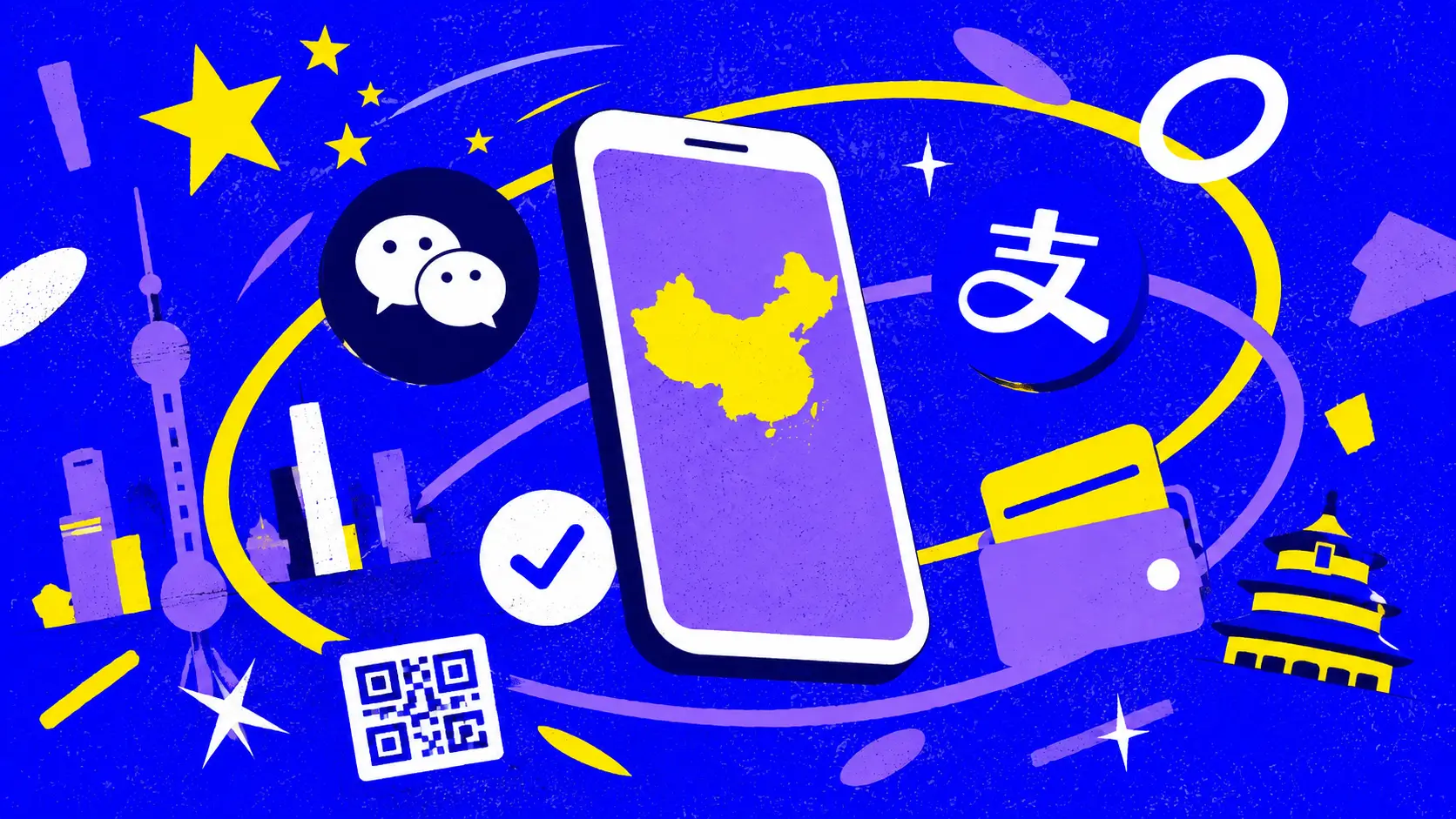
China did not simply make the same digital journey as Europe or the United States at a faster pace.
Its mobile ecosystem developed under different technological, economic and cultural conditions. And those differences matter.
To understand why platforms such as WeChat and Alipay evolved into Super Apps, why QR codes became embedded in everyday interactions, or why Chinese mobile interfaces can feel radically different from their Western counterparts, we first need to understand how mobile became the centre of China's digital life.
This is not just a story about smartphones.
It is a story about what happens when an entire digital ecosystem develops around mobile from an early stage.
China took a different route to the mobile Internet
Western digital products still carry traces of their desktop origins.
For decades, computers were the primary gateway to the Internet. Websites, ecommerce, email, online banking and countless digital behaviours were established on desktop before progressively moving to smartphones.
Mobile design therefore inherited many conventions from the web.
China's trajectory was different.
Internet adoption accelerated at the same time as increasingly affordable smartphones and rapidly expanding mobile infrastructure became available.
According to the China Internet Network Information Center (CNNIC), by June 2014 China had 632 million Internet users, including 527 million mobile Internet users.
More importantly, 83.4% of Chinese Internet users were accessing the Internet via mobile phones, compared with 80.9% using traditional PCs.
It was the first time mobile had overtaken PCs as China's leading Internet access device.
This shift is fundamental to understanding what happened next.
For hundreds of millions of people, the smartphone was not simply a smaller screen onto which existing desktop behaviours had to be transferred.
It increasingly became the primary interface to the digital world.
This phenomenon is sometimes discussed through the concept of technological leapfrogging.
Leapfrogging occurs when a market skips or significantly shortens an established stage of technological development and moves directly towards a newer technology.
China did not simply "skip the desktop", as the story is sometimes oversimplified. Computers played an important role in the development of the Chinese Internet.
But China's rapid Internet adoption coincided with the expansion of smartphones and mobile broadband. This allowed mobile to become the dominant gateway to digital services relatively early in the country's Internet development.
That created very different conditions for product design.
From mobile-friendly to mobile-native
There is an important difference between mobile-friendly and mobile-native thinking.
Mobile-friendly design usually begins with an existing service and asks:
How can we make this work well on a smartphone?
Mobile-native thinking starts somewhere else:
What becomes possible when the smartphone is the primary interface?
That difference changes product decisions.
Navigation can be designed around taps, swipes and scrolling rather than conventions inherited from desktop software.
Cameras become input devices.
Location becomes contextual data.
QR codes can connect physical environments to digital services.
Payments can happen directly inside an interaction.
And services no longer necessarily need to send users from one website or application to another.
This helped create the conditions for a much more integrated mobile ecosystem.
Infrastructure made mobile scale possible
User behaviour does not evolve independently from infrastructure.
China invested heavily in telecommunications while domestic smartphone manufacturers helped make increasingly capable mobile devices accessible to a rapidly expanding population of Internet users.
At the same time, messaging, ecommerce, mobile payments, video, entertainment and countless other services were developing around the same device.
The smartphone was becoming more than a communication tool.
It was becoming infrastructure.
That distinction is essential.
When connectivity, devices, payments and digital services scale simultaneously, mobile products no longer need to behave as isolated applications.
They can start becoming part of interconnected ecosystems.
Mobile payments accelerated the transformation
Payments were another major catalyst.
Platforms such as Alipay and WeChat Pay helped turn the smartphone into a bridge between digital services and physical environments.
Payments were no longer limited to ecommerce checkout.
A mobile interaction could increasingly connect restaurants, retailers, transportation, services and physical locations to the same digital ecosystems people were already using for everyday tasks.
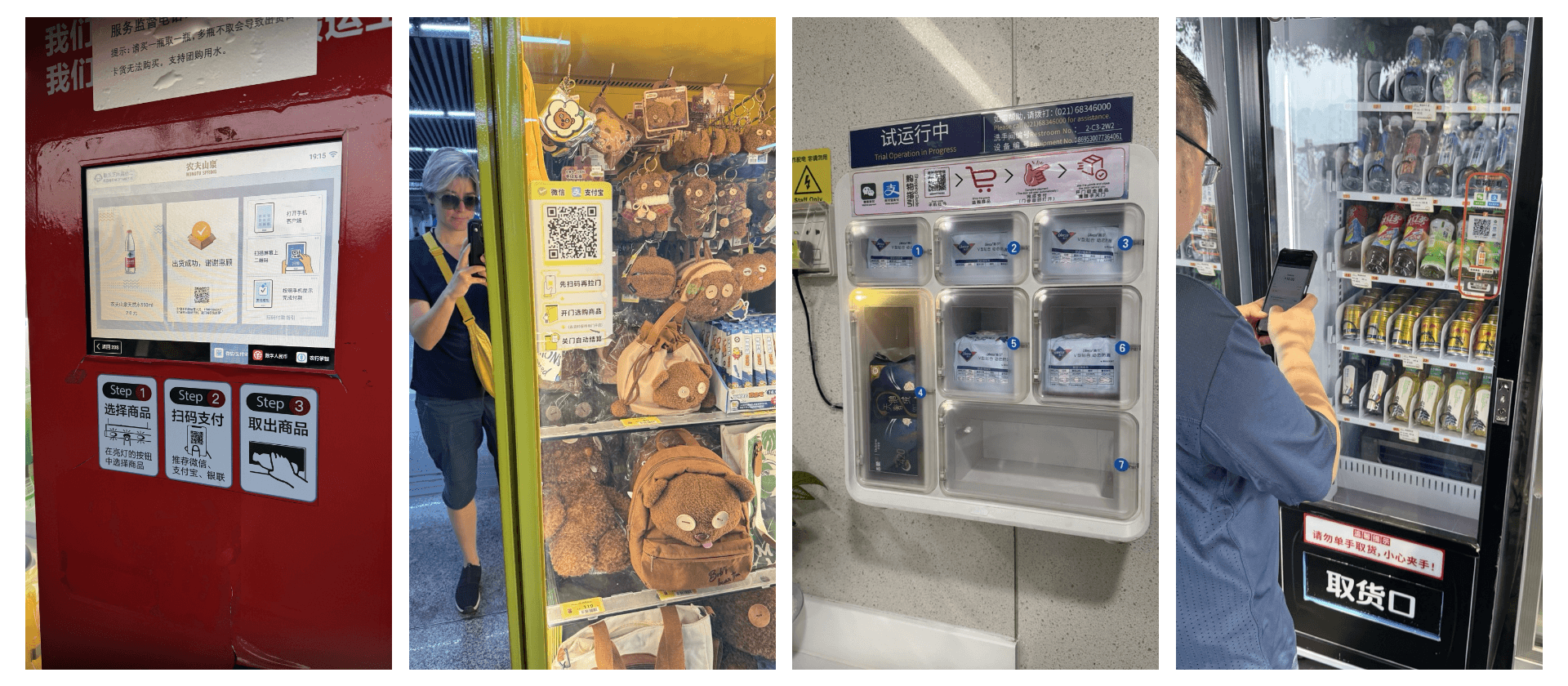
The QR code played an important role in that transition.
A simple scan could connect a physical object, merchant or location to a digital action.
Discover something.
Scan.
Order.
Pay.
Continue.
The fewer transitions users have to make between services, interfaces and payment systems, the more fluid the overall experience becomes.
And that principle would eventually become one of the defining characteristics of China's Super Apps.
The app can become the ecosystem
Western mobile markets have historically favoured relatively specialised applications.
One app for messaging.
Another for banking.
Another for transport.
Another for shopping.
Another for food delivery.
Another for entertainment.
China demonstrated another model.
Instead of requiring users to continuously move between independent services, platforms such as WeChat and Alipay progressively expanded the number of activities that could happen within a single mobile environment.
This is where the logic of the Super App begins to emerge.
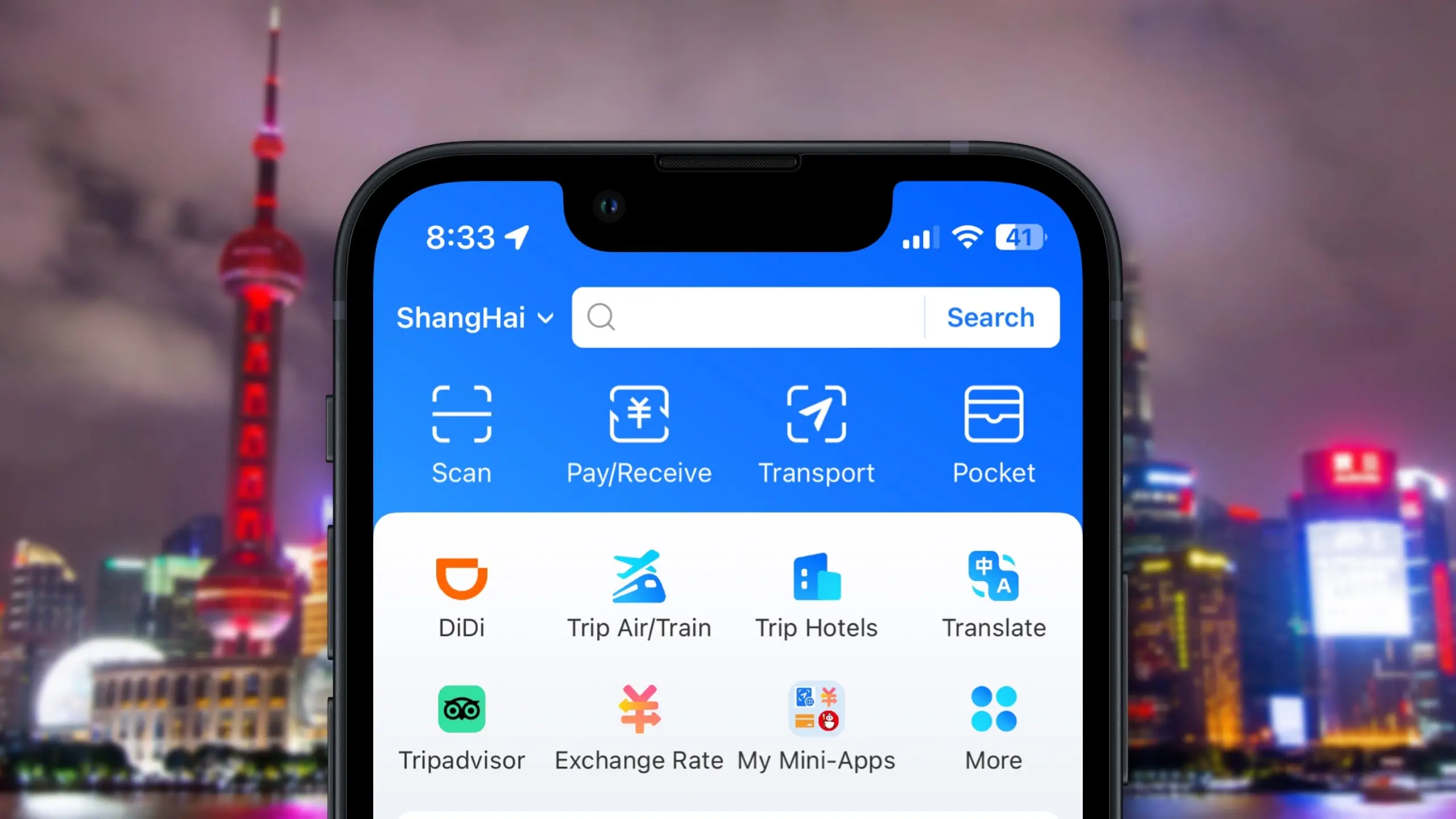
A Super App can be understood as a mobile platform that combines multiple services — including services provided by third parties — inside a single application ecosystem.
Messaging, payments, ecommerce, transportation, entertainment, public services, loyalty programmes and many other interactions can coexist within the same environment.
The goal is not necessarily to create one enormous application containing every possible feature.
The more important shift is architectural:
the application becomes a platform through which other services can be accessed.
WeChat illustrates this particularly well.
Launched by Tencent in 2011, WeChat — known as Weixin in China — progressively expanded beyond messaging. Weixin Pay followed in 2013, and Mini Programs were officially launched in 2017.
Mini Programs allow users to access lightweight third-party services from within the Weixin ecosystem without installing a traditional standalone application for every interaction.
Alipay followed a different path.
It began with payments before progressively expanding into a much broader ecosystem of services.
Different origins.
Similar destination.
The mobile app becomes an operating layer for everyday digital interactions.
Chinese mobile UX is not simply "more complex"
For Western product designers, Chinese mobile interfaces can initially appear dense.
More information.
More entry points.
More services.
More visual elements competing for attention.
It is tempting to judge these interfaces using Western design conventions and conclude that they are overloaded.
But that misses part of the picture.
An interface is never designed in a cultural vacuum.
Users learn patterns. Markets develop conventions. Repeated behaviours create expectations.
An interface that feels complex to someone unfamiliar with its conventions can feel extremely efficient to someone who understands the ecosystem.
This is particularly visible in Super Apps.
Western product design often values the clarity of a highly specialised application: one product, one primary purpose, carefully reduced navigation.
A Super App follows a different logic.

The value comes partly from the density and continuity of the ecosystem itself.
Users enter a familiar environment and progressively access whatever service they need.
That changes how we should think about complexity.
The relevant question is not simply:
How many features does this interface contain?
It is:
How much friction does the ecosystem remove from the user's everyday interactions?
From individual apps to digital ecosystems
This may be the most important lesson from China's mobile development.
For years, much of the Western product industry has treated the application as the fundamental unit of the mobile economy.
China increasingly demonstrated that the ecosystem could become the more important unit.
The difference is significant.
An app delivers a service.
An ecosystem connects services.
And once payments, identity, communication, content, commerce and third-party experiences can interact within the same environment, entirely different product models become possible.
This helps explain why looking at WeChat or Alipay simply as "apps with lots of features" is misleading.
Their importance lies less in the number of functions they contain than in the infrastructure they have built around those functions.
Why this matters beyond China
It would be a mistake to assume that China's model can simply be copied and applied to the United States or Europe.
Regulation is different.
Consumer expectations are different.
Competition is different.
Payment infrastructure is different.
Digital culture is different.
But understanding China's mobile ecosystem remains valuable because it challenges assumptions that Western product teams often treat as universal.
Does every digital service need its own app?
Should users continually move between independent platforms?
Should physical and digital experiences remain separate?
Is a highly specialised application always preferable to an ecosystem?
And what happens when identity, payment, content, services and engagement can coexist inside the same mobile environment?
These questions are becoming increasingly relevant beyond China.
Companies are progressively expanding beyond their original core services. Embedded experiences, APIs and SDKs are making it possible to bring third-party functionality into existing mobile applications.
Across industries, the boundaries between an app, a platform and an ecosystem are becoming less obvious.
China reached this point through its own technological and cultural trajectory.
The West may take a different route.
But the underlying question is increasingly the same:
What if the future of mobile is not about having more apps, but about creating better-connected ecosystems?
That is where the story of the Super App really begins.
Frequently Asked Questions
What does mobile-first mean in China?
In the Chinese context, mobile-first describes an Internet ecosystem in which smartphones became the primary way hundreds of millions of users accessed digital services.
By 2014, mobile had already overtaken traditional PCs as the leading Internet access device among Chinese Internet users, according to CNNIC.
Why did mobile grow so quickly in China?
Several factors converged: rapid Internet adoption, telecommunications infrastructure development, increasingly accessible smartphones and the growth of mobile-native services such as messaging, ecommerce and mobile payments.
The timing of these developments allowed mobile to become central to China's digital ecosystem relatively early.
What is leapfrogging, and how did it influence China's mobile ecosystem?
Leapfrogging describes the process by which a market skips or shortens an established stage of technological development and moves directly to a newer technology.
In digital markets, a common example is the adoption of mobile phones and mobile broadband without first developing the same widespread dependence on fixed-line infrastructure and desktop Internet seen in earlier-connected economies.
China's digital transformation was not a complete leap over desktop computing, but it did display important leapfrogging dynamics.
As Internet adoption accelerated, smartphones and mobile broadband were expanding rapidly at the same time. This allowed hundreds of millions of users to make mobile their primary gateway to digital services relatively early in China's Internet development.
This helped create favourable conditions for mobile-native behaviours such as QR code payments, integrated digital services and, eventually, Super App ecosystems such as WeChat and Alipay.
What is the difference between mobile-first and mobile-native?
Mobile-first generally means prioritising the mobile experience when designing a digital product.
Mobile-native goes further: the product is conceived around capabilities and behaviours specific to smartphones rather than adapting conventions inherited from desktop interfaces.
Cameras, location, QR codes, mobile payments and embedded services can therefore become fundamental parts of the product experience rather than additional features.
What is a Super App?
A Super App is a mobile platform that provides access to multiple services within a single application ecosystem.
These can include payments, messaging, ecommerce, transportation, entertainment, loyalty, public services and third-party experiences.
Rather than requiring a separate standalone application for every service, a Super App acts as an environment through which multiple services can be accessed.
Why did Super Apps emerge in China?
There is no single cause.
Their emergence was supported by China's rapid mobile adoption, widespread mobile payments, large digital platforms, evolving consumer behaviours and the development of ecosystems capable of integrating multiple services into a single mobile environment.
Are WeChat and Alipay both Super Apps?
Yes, although they followed different paths.
WeChat began primarily as a messaging application, while Alipay originated in digital payments. Both progressively developed broader ecosystems that allow users to access many services without constantly moving between separate applications.
What role do Mini Programs play in Super Apps?
Mini Programs are lightweight services that operate inside a larger platform such as Weixin/WeChat or Alipay.
They allow third-party organisations to provide functionality within an existing ecosystem without requiring users to download and manage a separate standalone application for every service.
This modular approach is one of the architectural characteristics that makes the Super App model particularly interesting.
Are Super Apps only relevant to China?
No.
China provides some of the most established examples, but the underlying model is increasingly relevant elsewhere.
Western companies are expanding beyond single-purpose applications, while APIs, SDKs and embedded services make it increasingly possible to integrate multiple experiences within existing mobile products.
The Western model may not reproduce WeChat or Alipay exactly, but the movement from single-purpose apps towards broader mobile ecosystems is worth watching.
Sources & Further Reading
China Internet Network Information Center (CNNIC)
The 34th Statistical Report on Internet Development in China, 2014.
https://www.cnnic.com.cn/AU/MediaC/rdxw/2014/201407/t20140723_47471.htm
World Bank
The Fast Changing World of Information and Communications Technology.
Useful background on technological leapfrogging and the development of mobile connectivity.
https://blogs.worldbank.org/en/opendata/fast-changing-world-information-and-communications-technology
Tencent
Our Story — Key Milestones.
Official chronology covering the launch and development of Weixin/WeChat, Weixin Pay and Mini Programs.
https://www.tencent.com/who-we-are/our-story/
Tencent
Weixin & WeChat.
Overview of the Weixin/WeChat ecosystem and its services.
https://www.tencent.com/products/weixin-wechat/
Tencent
Weixin Mini Programs.
Official introduction to the Mini Program ecosystem and its role in connecting users with services inside Weixin.
https://www.tencent.com/products/weixin-mini-programs/
Tencent
Weixin Is a Tool That Changes Our Lifestyles — Social Responsibility Report.
Historical context on the development and philosophy of Weixin Mini Programs.
https://static.www.tencent.com/uploads/2019/12/18/775498e42e71f866396d99edfb77cbd9.pdf