
Super App & SDk
Written by Jacinthe Busson, Co-founder & CPO at Fastory, based on her research and observations on mobile ecosystems, UX and Super Apps.
For years, Chinese Super Apps looked like a digital model that belonged somewhere else.
Too dense.
Too centralised.
Too different from Western habits.
Platforms such as WeChat and Alipay were often described as products of a uniquely Chinese technological, economic and political environment.
And that is partly true.
China's Super Apps developed in an ecosystem shaped by mobile-first adoption, QR-code payments, integrated digital services, Mini Programs, large-scale identity systems and a regulatory environment very different from Europe or the United States.
But something is changing.
Western platforms are increasingly moving beyond the idea that:
one app should solve one problem.
Uber now describes its 2026 strategy as “one app for everything”, bringing rides, food, hotels, travel services and AI-powered assistance into a more connected experience.
Airbnb has expanded beyond accommodation into services, experiences, hotels, airport transfers, car rentals, grocery delivery and AI-assisted trip planning.
Revolut has spent years describing itself as a financial Super App, progressively adding payments, savings, investments, travel, insurance, eSIMs and other services around a single mobile account.
None of these companies is building another WeChat.
But they may be moving towards the same underlying idea:
the application is no longer the product.
The ecosystem is.
China built the reference model first
To understand what is changing in the West, it helps to return to China.
As explored in Why China Became Mobile-First, the country followed a different digital trajectory from Europe and the United States.
The smartphone became the primary gateway to the Internet relatively early.
Mobile payment became deeply integrated into physical environments.
QR codes connected offline contexts with digital services.
WeChat expanded from messaging into payments, commerce and Mini Programs.
Alipay expanded from payments into a much wider service ecosystem.
The result was not simply a collection of large applications.
It was the emergence of mobile infrastructures for everyday life.
Users could communicate, pay, travel, shop, access services, interact with merchants and use third-party applications while remaining inside a relatively small number of ecosystems.
This model challenged a deeply established Western assumption:
that digital specialisation is always preferable to integration.
The West historically chose fragmentation
Western digital markets evolved around a different model.
A specialised service.
A specialised website.
Then a specialised app.
Uber for transportation.
Booking.com for hotels.
Deliveroo or DoorDash for food.
PayPal for payments.
WhatsApp for messaging.
Amazon for ecommerce.
Spotify for music.
Each product could focus intensely on a specific user problem.
This specialisation produced excellent products.
It also created fragmentation.
Users accumulated apps.
Accounts.
Passwords.
Payment methods.
Loyalty programmes.
Notifications.
Interfaces.
Subscription relationships.
From the perspective of an individual company, each experience might be optimised.
From the perspective of the user, the overall digital journey became increasingly distributed.
And the more services mobile users depend on, the more visible this fragmentation becomes.
The Super App solves a different problem
A Super App does not necessarily make each individual service better.
It solves another problem:
the transitions between services.
As we explored in The Power of Instantaneity, every transition creates interaction cost.
Open another app.
Authenticate again.
Search again.
Enter another payment method.
Rebuild context.
Learn another interface.
A Super App attempts to preserve more of that context.
Shared identity.
Shared payments.
Shared navigation.
Shared services.
Shared infrastructure.
This is why the Super App model is often misunderstood when it is reduced to:
“one application with lots of features.”
The real value lies in continuity between experiences.
That idea is now becoming increasingly visible in Western product strategies.
Uber is becoming much more than a ride-hailing app
Uber may currently be the clearest Western example.
Its original proposition was simple:
open the app and get a ride.
Then came food delivery.
Grocery and retail delivery.
Subscriptions.
Reservations.
Advertising.
Logistics.
Autonomous vehicles.
And increasingly, travel.
At its GO–GET 2026 product event, Uber explicitly described its direction as:
“One app for everything.”
The company introduced hotel booking through a partnership with Expedia Group, with access to hundreds of thousands of properties.
It expanded Travel Mode, designed to guide users through airports and destinations.
It integrated restaurant discovery through OpenTable.
It added hotel delivery experiences.
Uber One benefits became more international.
A redesigned search experience began connecting places, food and products from the same entry point.
Uber's stated ambition is increasingly clear:
reduce the number of separate decisions and applications required to manage a journey.
That is very close to Super App logic.
Uber is organising a journey, not just providing transport
This distinction matters.
If Uber simply adds hotels as another button, it remains a multi-service application.
If the services begin to understand one another, something more significant happens.
A flight arrives.
Uber knows the destination.
A ride connects the airport to the hotel.
Travel Mode provides contextual recommendations.
A restaurant can be reserved.
Food can be delivered to the hotel.
Uber One benefits can apply across several interactions.
Search can operate across multiple service categories.
The value no longer comes only from each service individually.
It comes from orchestration across a journey.
This is one of the defining characteristics of an ecosystem.
And it echoes an architectural principle already visible in Chinese Super Apps:
The user should manage less complexity because the platform manages more of the connections.
Airbnb is moving in the same direction from a different starting point
Airbnb followed a completely different path.
Its core product was accommodation.
Find a place.
Book it.
Stay.
But accommodation represents only one part of a trip.
Once Airbnb owns the moment when a traveller decides where to stay, an obvious product question emerges:
How much more of the trip can happen through the same platform?
In 2025, Airbnb expanded its proposition with Services and a renewed focus on Experiences.
By its Summer 2026 release, the company had gone further.
Car rentals.
Grocery delivery.
Airport pickups.
Boutique hotels.
Independent hotels.
More Experiences.
Shared trip planning.
Travel recommendations.
AI-powered support.
The product is moving away from being simply a marketplace for accommodation.
It is becoming a broader travel interface.
Airbnb itself describes the ambition in terms of making more parts of a trip available through the same platform.
The interesting part is not how many services Airbnb adds
Again, feature count is not the most important signal.
The deeper question is whether these services begin to share:
context;
identity;
payments;
itinerary information;
recommendations;
messaging;
and AI assistance.
Airbnb's itinerary already provides a natural organisational layer.
A home.
An airport transfer.
An Experience.
A service.
A restaurant recommendation.
A travel assistant.
If these elements increasingly understand the context of the same trip, Airbnb does not need to become a Chinese-style Super App.
It can become something more specific:
a vertical Super App for travel.
That may be a more realistic Western model.
Not one application controlling every part of life.
But one ecosystem controlling an increasingly large part of a specific domain.
This may be the Western version of the Super App
The Chinese model is broad.
WeChat and Alipay touch many unrelated areas of everyday life.
The Western model may evolve differently.
Instead of:
one Super App for everything
we may see:
one ecosystem for each major category of life.
Travel.
Finance.
Mobility.
Commerce.
Entertainment.
Work.
Health.
Each platform expands around an existing relationship with the user.
The Super App therefore becomes less universal and more vertical.
Uber can become a mobility and travel ecosystem.
Airbnb can become a travel and hospitality ecosystem.
Revolut can become a financial ecosystem.
Amazon already operates across commerce, entertainment, cloud infrastructure, advertising, logistics and connected devices, even if those services are not presented through one unified mobile interface.
The Western Super App may therefore emerge not through imitation, but through convergence.
Revolut may be the clearest European example
In Europe, Revolut is particularly interesting.
The company has explicitly used the term financial Super App for years.
Its original product proposition was relatively narrow:
a mobile account designed to simplify international payments and currency exchange.
Over time, the application expanded.
Current accounts.
Payments.
Savings.
Investments.
Crypto.
Insurance.
Business accounts.
Travel products.
eSIMs.
Subscriptions.
Budgeting tools.
Rewards.
Messaging around payments.
Each new service increases the number of financial interactions that can take place without leaving Revolut.
In 2022, the company described the launch of Revolut Chat as another “step forward to super app” positioning.
This is significant because Europe is often considered structurally hostile to Super Apps.
Strong financial regulation.
Open banking.
Privacy rules.
Antitrust regulation.
Competitive markets.
And yet the logic continues to emerge.
Revolut demonstrates another path to the Super App
Revolut does not need to provide transport, food delivery or public services to behave like a Super App.
Its ecosystem can remain focused on one domain:
money.
But within that domain, the number of services can expand dramatically.
This suggests another useful distinction.
A Super App does not necessarily need to cover every part of everyday life.
It can also become an operating layer for a specific category of behaviour.
For Revolut: money.
For Airbnb: travel.
For Uber: mobility and increasingly travel.
The architectural principle remains similar:
one trusted mobile environment becomes the gateway to multiple related services.
Trust may be the West's biggest constraint
There is, however, one major difference between adding services and becoming a Super App: trust.
The more services an ecosystem controls, the more sensitive its position becomes.
Payments.
Identity.
Location.
Health.
Travel.
Purchasing behaviour.
Communication.
Recommendations.
A highly integrated ecosystem can create extraordinary convenience.
It can also create extraordinary concentration of information and power.
Western consumers and regulators have repeatedly demonstrated discomfort with this concentration.
This is one reason attempts to build broad Super Apps in Western markets have faced resistance.
The question is not simply:
Can the technology be built?
It is:
Will users and regulators accept one company occupying such a central position?
Meta illustrates the difficulty
Meta arguably has many of the ingredients required to build a Western Super App.
Messaging through WhatsApp and Messenger.
Social identity through Facebook and Instagram.
Commerce.
Advertising.
Business messaging.
Payments in selected markets.
AI assistants.
A massive existing user base.
Technically, the ecosystem could support extensive integration.
But Meta also illustrates the trust problem.
Years of controversy around privacy, data use and platform power have made deeper integration politically and culturally sensitive.
A Super App requires users to delegate more.
More information.
More transactions.
More relationships.
More context.
That delegation is difficult without trust.
The lesson is important:
Super Apps are not created by feature accumulation alone.
They require a social licence to centralise.
Regulation changes the architecture
China and Western markets also differ significantly in regulation.
Europe in particular has moved towards interoperability and competition through regulations such as the Digital Markets Act.
The objective is partly to prevent dominant platforms from using their position to lock users and businesses into closed ecosystems.
This creates a fascinating tension.
From a UX perspective, integration can reduce friction.
From a competition perspective, integration can increase dependency.
A platform that handles identity, payments, discovery, services and distribution can provide an excellent user experience.
But it can also become extremely difficult to compete with.
This means the Western Super App may need to be structurally more open than its Chinese predecessors.
APIs.
Interoperability.
Portable identity.
External payment systems.
Third-party services.
SDKs.
The architecture may need to reconcile integration for the user with openness for the market.
Mini Programs offer one possible model
This is why Mini Programs: The Architecture Behind Super Apps matters beyond China.
A Super App does not necessarily need to build every service itself.
It can provide an environment in which external services operate.
This changes the model from:
centralised feature ownership
to:
centralised orchestration of modular services.
The distinction may become particularly important in Western markets.
A company could own the host application without owning every underlying service.
An SDK could embed experiences.
APIs could connect external platforms.
Shared identity could reduce friction.
Payment providers could remain independent.
The user sees continuity.
The ecosystem remains technically distributed.
This may be one path towards a more interoperable Western Super App model.
AI could accelerate the transition
AI adds another layer.
Until now, large ecosystems have faced a usability problem.
The more services they contain, the harder they become to navigate.
AI can potentially change that.
Instead of browsing through dozens of services, users can express intent.
“Plan my weekend in London.”
The system can potentially coordinate:
transport;
hotel;
restaurant;
activities;
payments;
and recommendations.
This connects directly with the ideas explored in When Seamless UX Becomes Governance: AI Inside Alipay.
AI can transform the Super App from a catalogue into an orchestration system.
Uber's 2026 Voice Bookings already use conversational AI to understand destinations and preferences.
Airbnb is increasingly integrating AI into search, planning and customer support.
The implication is significant.
AI may remove one of the biggest historical limitations of Super Apps:
interface complexity.
The Super App may eventually become invisible
There is an interesting possibility here.
Perhaps the Western Super App will not look like WeChat.
It may not have a home screen containing dozens of icons.
It may not even feel like a Super App.
The user expresses intent.
The platform understands context.
Services are orchestrated behind the interface.
Payments happen through existing infrastructure.
Embedded experiences appear when relevant.
The user sees the result.
In that model, the Super App becomes less visible precisely as it becomes more powerful.
It functions as an orchestration layer behind the user's intentions.
That could be the point at which Super Apps and AI converge.
Western Super Apps may emerge from behaviour, not ideology
This is perhaps the most important difference.
China built Super Apps within a specific infrastructure and institutional environment.
Western platforms are unlikely to reproduce that model deliberately.
They may arrive at something similar because the economics of digital products push them there.
Acquiring users is expensive.
Retaining them is valuable.
Cross-selling services increases lifetime value.
Shared payment infrastructure reduces friction.
Subscriptions reward ecosystem usage.
AI makes orchestration easier.
Existing mobile audiences create distribution.
Each of these forces encourages platforms to expand around the relationship they already own.
No strategic meeting needs to begin with:
“Let's build a Super App.”
The company simply asks:
What else does this user need before, during or after the service we already provide?
Repeat that question for several years and the application gradually becomes an ecosystem.
This is already visible in Uber
Uber's current product direction illustrates this perfectly.
A ride creates a travel context.
Travel creates hotel demand.
Hotels create food and local-service demand.
Airports create navigation and assistance needs.
Uber One creates a loyalty layer connecting several services.
One Search reduces fragmentation between them.
The product expands not randomly, but around adjacent user intentions. Uber's investor materials explicitly describe this as a continued platform strategy to bring more of everyday life into one experience.
That is very close to ecosystem design.
And increasingly visible in Airbnb
Airbnb follows the same principle.
Accommodation creates a trip context.
A trip creates transport needs.
Food needs.
Experiences.
Services.
Planning.
Customer support.
Recommendations.
Airbnb's 2026 release adds precisely these adjacent services, including car rental, grocery delivery and airport pickups, alongside AI-powered planning and support.
Again, the platform is not expanding randomly.
It is expanding around the user's journey.
The user's journey may become the real product boundary
This suggests an important product-design shift.
Traditional software often defines its boundaries through the company's product.
Uber makes rides.
Airbnb books homes.
Revolut manages money.
A Super App defines its boundaries differently.
It begins with the user's journey.
What happens before the ride?
After the ride?
During the trip?
After the payment?
Around the purchase?
Around the event?
Once product teams think this way, adjacent services become easier to identify.
The strategic unit changes from:
Feature
to:
Journey
and eventually to:
Ecosystem.
Europe has another structural challenge
There is one reason this evolution may be particularly important for Europe.
The continent has many strong digital services.
But its digital infrastructure remains highly fragmented across:
countries;
administrations;
payment systems;
health systems;
transport operators;
identity systems;
and private platforms.
Europe has invested considerably in interoperability, digital identity and regulation.
But the user experience often remains distributed across organisational boundaries.
The problem is not necessarily a lack of applications.
Often, it is the opposite.
There are too many disconnected applications and systems.
This makes the Super App debate more interesting than simply asking whether Europe needs its own WeChat.
The more useful question may be:
How can European digital services become more connected without creating another closed monopoly?
The answer may be ecosystems rather than monopolies
A Western Super App does not necessarily need to own everything.
It may instead orchestrate an ecosystem of specialised providers.
One identity layer.
Several external services.
One consistent mobile experience.
Multiple payment providers.
Embedded modules.
Shared standards.
APIs.
SDKs.
User-controlled permissions.
This would preserve some of the advantages of specialised providers while reducing the fragmentation experienced by users.
The Super App therefore does not need to represent:
one company doing everything.
It can represent:
one interface connecting everything relevant to a specific context.
This distinction could be crucial for Western markets.
What Uber, Airbnb and Revolut have in common
On the surface, these companies have little in common.
Transport.
Travel.
Finance.
But their product strategies reveal several similar patterns.
They already own a frequent or high-value relationship with users.
They are progressively expanding into adjacent services.
They use shared mobile identity.
They reuse payment relationships.
They introduce subscription or loyalty mechanisms.
They increasingly connect data across services.
And they are attempting to reduce the need for users to leave their ecosystems.
In other words:
they are moving from product companies towards platform companies.
This is the same architectural transition we observed with Alipay.
The destination may look different.
The movement is similar.
The West probably will not build another WeChat
This point is important.
Asking whether Uber, Airbnb or Revolut will become "the Western WeChat" is probably the wrong question.
The economic, regulatory and cultural conditions are too different.
Western markets are likely to remain more fragmented.
Users may continue to use several competing ecosystems.
Regulation will continue to limit certain forms of concentration.
Interoperability will matter.
Trust will constrain how much data platforms can centralise.
But Super App principles can still spread.
Shared identity.
Embedded services.
Modular architectures.
Cross-service loyalty.
Integrated payments.
Contextual discovery.
AI orchestration.
The Western Super App may therefore be less centralised, more vertical and more modular.
But it can still be a Super App.
From Super Apps to mobile ecosystems
Perhaps eventually the terminology itself will matter less.
Users do not care whether an application qualifies as a Super App.
They care whether it works.
Whether they need another account.
Another download.
Another payment method.
Another password.
Another interface.
Another interruption.
From that perspective, the Super App debate is really about something broader:
How should digital services be organised around human behaviour?
The Chinese answer was deep integration.
The Western answer may be interoperability and orchestration.
The technologies are converging.
APIs.
SDKs.
Embedded experiences.
Digital identity.
Payments.
AI agents.
The architectures are becoming more modular.
And major Western platforms are increasingly asking the same strategic question:
How much of the user's journey can happen without leaving our environment?
That is why Super Apps no longer look like an exclusively Chinese phenomenon.
They may simply look different when they arrive in the West.
Frequently Asked Questions
What is a Western Super App?
A Western Super App is a mobile ecosystem that integrates multiple services within one application or connected platform while operating within Western market, regulatory and consumer expectations.
Unlike Chinese Super Apps, Western versions may be more specialised, modular and interoperable rather than attempting to centralise every aspect of everyday life.
Are Super Apps coming to Europe and the United States?
Elements of the Super App model are already emerging.
Companies such as Uber, Airbnb and Revolut are expanding beyond their original core services and integrating more capabilities around a shared user account, payment relationship and mobile interface.
However, Western Super Apps are likely to develop differently from WeChat or Alipay.
Is Uber becoming a Super App?
Uber increasingly displays characteristics associated with Super Apps.
Its ecosystem now extends beyond ride-hailing into food and retail delivery, hotels, travel services, subscriptions and AI-powered assistance.
At GO–GET 2026, Uber explicitly described its strategy as “one app for everything.”
That does not make Uber equivalent to WeChat, but it demonstrates a clear move towards broader ecosystem thinking.
Is Airbnb becoming a Super App?
Airbnb is increasingly moving beyond accommodation.
Its platform now integrates Homes, Experiences and Services, while its 2026 product expansion added areas such as car rental, grocery delivery, airport pickups, hotels and AI-supported planning.
This could be understood as the development of a vertical Super App focused on travel rather than everyday life as a whole.
Is Revolut a Super App?
Revolut has explicitly positioned itself as a financial Super App.
It combines multiple financial and adjacent services within the same mobile environment, including payments, savings, investments, travel-related services and other products.
Its scope remains narrower than Chinese Super Apps, but the platform follows many of the same ecosystem principles.
What is a vertical Super App?
A vertical Super App integrates multiple services around one major area of user behaviour rather than attempting to cover every aspect of daily life.
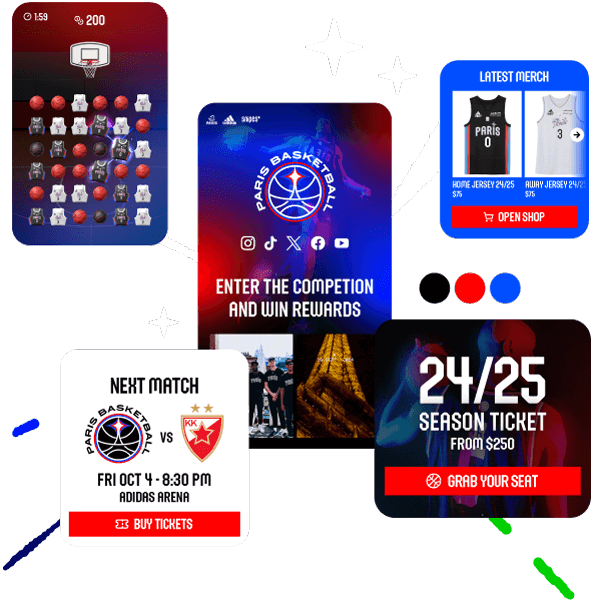
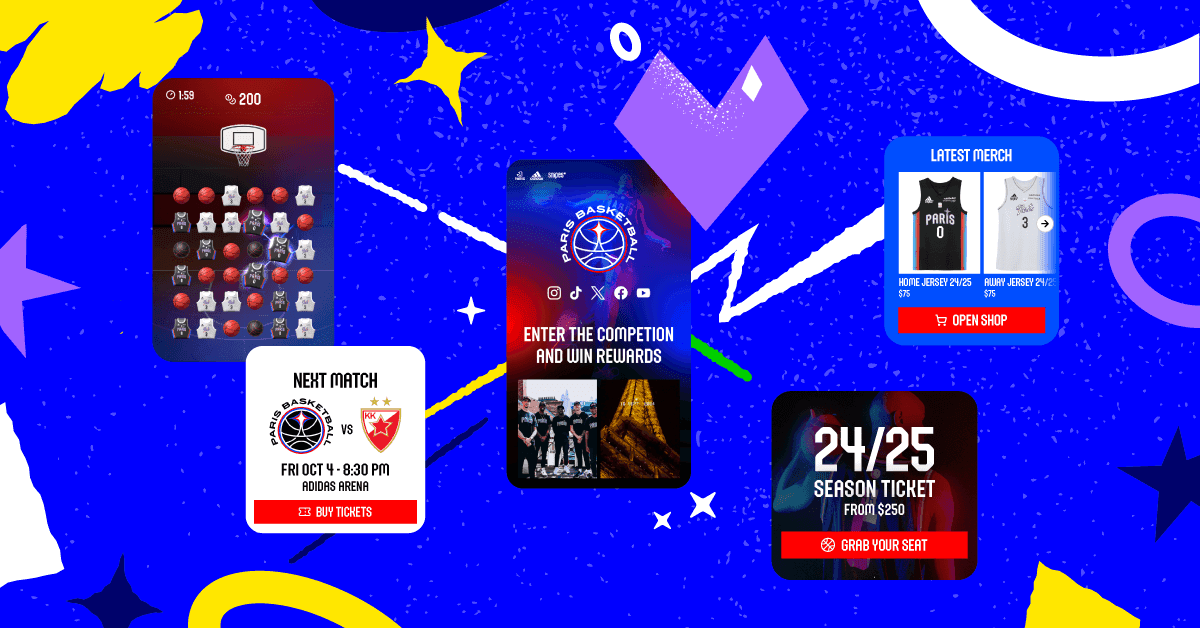
Examples might include a travel ecosystem, financial ecosystem, mobility ecosystem or sports ecosystem.
This model may be particularly relevant in Western markets.
Why are Super Apps more difficult to build in Western markets?
Western markets have different regulatory, competitive and cultural conditions.
Privacy expectations, antitrust laws, payment infrastructure, app-store dynamics and consumer attitudes towards platform concentration can all make highly centralised ecosystems more difficult to build.
What is the difference between a Super App and an ecosystem?
A Super App is the user-facing application or platform through which multiple services are accessed.
The ecosystem includes the wider network of services, developers, merchants, APIs, payment systems and infrastructure operating around that platform.
Do Super Apps need to own every service they provide?
No.
A Super App can integrate third-party services through APIs, Mini Programs, SDKs or embedded experiences.
The platform can therefore orchestrate services without directly building or owning all of them.
How can APIs and SDKs help create Super Apps?
APIs allow software systems to communicate, while SDKs can provide developers with reusable capabilities and integration tools.
Together, they can help an existing mobile application incorporate external services, embedded experiences and modular functionality without rebuilding every capability from scratch.
Could AI accelerate the development of Super Apps?
Yes.
AI can help users navigate complex ecosystems by interpreting intent, recommending relevant services and orchestrating tasks across multiple capabilities.
This could allow Super Apps to become easier to use even as the number of available services increases.
What is an AI-powered Super App?
An AI-powered Super App combines a multi-service mobile ecosystem with artificial intelligence capable of helping users discover, coordinate or execute actions across those services.
Instead of navigating manually through every feature, users may increasingly interact through intent-driven interfaces.
Will Western Super Apps replace standalone mobile apps?
Probably not.
Standalone applications remain appropriate for many specialised and frequently used products.
The more likely evolution is a mixed ecosystem in which standalone apps coexist with embedded services, vertical Super Apps and broader platform environments.
What could be the next industry to adopt the Super App model?
Any industry with multiple fragmented services around the same user relationship could potentially adopt Super App principles.
Travel, finance, mobility, healthcare, entertainment and sports are all relevant examples.
The strongest opportunities often exist where users already rely on several disconnected services around a shared journey or community.
Sources & Further Reading
Uber
GO–GET 2026: One App for Everything, April 29, 2026.
Official product announcement covering hotel bookings, Travel Mode, One Search, Voice Bookings and Uber's broader platform strategy.
https://www.uber.com/in/en/newsroom/go-get-2026/
Uber Technologies — Investor Relations
Uber Expands into Travel with Hotel Bookings and New In-App Features, April 29, 2026.
Official corporate announcement describing Uber's strategy to bring more of everyday life into one connected experience.
https://investor.uber.com/news-events/news/press-release-details/2026/Uber-Expands-into-Travel-with-Hotel-Bookings-and-New-In-App-Features/default.aspx
Airbnb
2026 Summer Release: Now There's Even More to Airbnb, May 20, 2026.
Official announcement covering car rentals, grocery delivery, airport pickups, hotels, Services, Experiences and AI-powered trip tools.
https://news.airbnb.com/airbnb-2026-summer-release
Airbnb
Introducing Airbnb Services.
Background on Airbnb's expansion beyond accommodation into bookable services integrated into the wider trip experience.
https://www.airbnb.com/resources/hosting-homes/a/introducing-airbnb-services-741
Revolut
Revolut Launches Revolut Chat, an Instant Messaging Feature in Step Forward to Super App, November 2022.
Official example of Revolut explicitly positioning its development around a financial Super App strategy.
https://www.revolut.com/fr-FR/news/revolut_launches_revolut_chat_an_instant_messaging_feature_in_step_forward_to_super_app/
Tencent
Weixin & WeChat.
Official overview of the broader Weixin ecosystem and its integrated services.
https://www.tencent.com/products/weixin-wechat/
Alipay Mini Program Development Platform
Make Your App a Super App.
Technical documentation illustrating how modular services, Mini Programs and SDK infrastructure can support Super App architectures.
https://miniprogram.alipay.com/product