
Fan engagement & Loyalty
Last week, Alibaba Cloud Global invited us to attend Apsara Conference 2026 in Hangzhou, one of the major events dedicated to AI and cloud technologies within the Alibaba ecosystem.
A huge thank you to the Alibaba Cloud Global team for the invitation and the opportunity to experience the event from the inside.

And the scale was impressive.
More than 50,000 sqm dedicated to tech and AI, 1,000+ companies, 2,000+ speakers, 120+ conferences and forums, huge thematic exhibition halls, workshops, demos, robots, agents, foundation models, hardware, cloud infrastructure… and around 120,000 attendees.
For two days, we explored, met companies, tested products, observed emerging technologies, took notes and attended conferences.
But beyond the scale of the event, what stood out most was the energy surrounding AI and everything currently being built around it.
There was a strong sense that everyone was there to experiment, build, ship and move forward.
So rather than simply sharing a recap of the event, we wanted to highlight what caught our attention from a product, UX and technology perspective.
Welcome to Apsara Conference 2026 🇨🇳

🤩 Designing an Experience at Scale
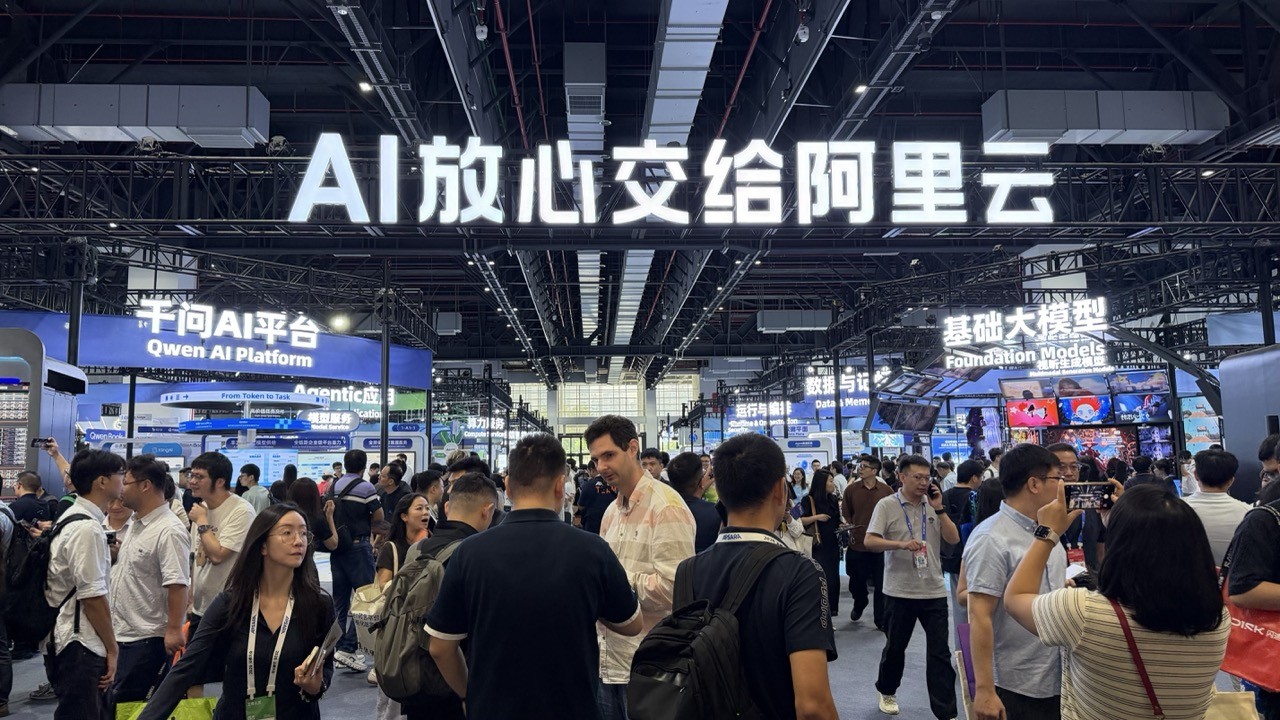
The first thing you notice when arriving at Apsara is obviously the scale of the venue.
Multiple floors, enormous exhibition halls, conference rooms everywhere, thousands of people constantly moving around and sometimes monumental booths, all with an impressive level of design and execution.
And yet, despite the sheer size of the event, it never really feels overwhelming.
Everything is extremely well organized.
Each area has a clear identity, strong visual signage and a scenography that makes it easy to immediately understand where you are and what you are about to discover.
From a design perspective, this was particularly interesting.
At an event of this size, with so many technologies, companies and conferences competing for attention, making the entire experience easy to navigate is a design challenge in itself.
And Apsara handles it remarkably well.


🤝 The Entire AI Value Chain in One Place
One of the most interesting aspects of Apsara was the diversity of companies, technologies and industries represented.
Apsara has historically been Alibaba’s major technology and cloud ecosystem conference.
In 2026, however, AI was everywhere, providing a remarkably broad view of the entire AI value chain.
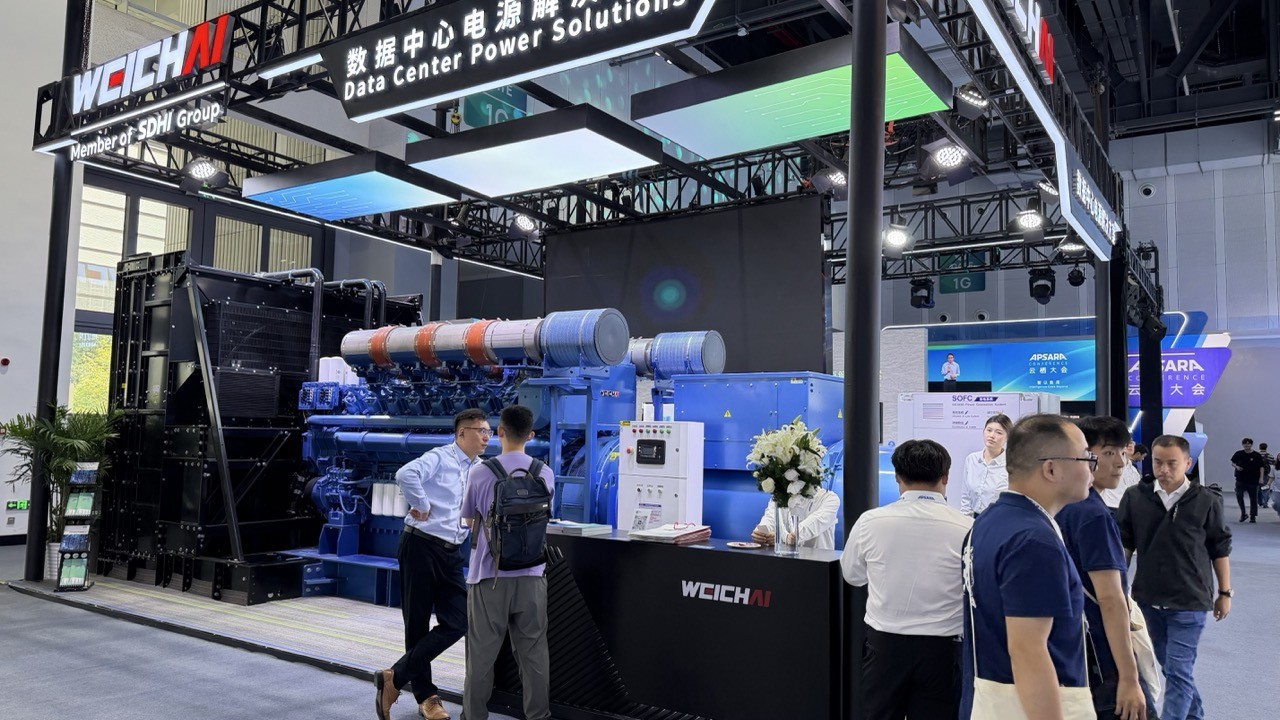
It starts with infrastructure, servers and computing power.
Then come the energy challenges required to support this infrastructure, followed by foundation models, agents and finally the application layer.
And that value chain now extends across almost every industry: healthcare, education, manufacturing, robotics, mobility, space, commerce, creative industries, entertainment, startups and research.
What was particularly interesting was not discovering each of these topics individually.
It was seeing all these layers interacting in the same place, within an ecosystem where the culture and approach to AI can be very different from what we usually experience in Western markets.
Because behind every new AI use case sits an entire technological, industrial and energy infrastructure that needs to evolve alongside it.
And this is probably one of Apsara’s greatest strengths: making the entire ecosystem visible, from infrastructure to end-user applications, from what already works today to what is currently being built for tomorrow.


🤖 When AI Moves Beyond the Screen: The Rise of AI-Native Devices
For a long time, our relationship with AI has remained primarily software-based: an interface, a screen, an application where users interact with a model.
At Apsara, one of the most striking trends was seeing how quickly AI is moving into physical products designed around it from the ground up.
Humanoid robots, intelligent vehicles, next-generation smartphones, AI glasses and other AI-native devices were everywhere.
We are no longer simply adding AI features to existing products.
We are starting to design products where AI is the starting point.
From a product and UX perspective, this raises some fascinating questions.
First came the web.
Then smartphones fundamentally transformed our interfaces, behaviors and the way we design digital products.
Now AI is reshuffling the deck once again.
When a device can see, hear, understand its environment, retain context and potentially act on our behalf, the way we interact with technology changes completely.
The interface may no longer need to be a screen.
The entry point may no longer need to be an app.
Users may not even need to understand how a product works before asking it to accomplish something.
And as AI moves even further beyond the screen and into the physical world, we are no longer talking only about new interfaces.
We are talking about machines capable of perceiving their environment, interpreting it and acting within it.
This convergence of AI, software, hardware, sensors and robotics was particularly visible throughout Apsara.


👉 What Does This Mean for the Way We Design Products?
This is probably the biggest question we took away from our two days in Hangzhou.
At this point, the question is no longer whether AI will transform our products.
It already is.
The more interesting question is:
What are we going to have to unlearn?
For years, we have designed interfaces that help humans understand how to interact with machines: menus, buttons, forms, user journeys, search engines and, more recently, chatbots.
A large part of product and UX design has been about making these interactions as simple and intuitive as possible.
But what happens when it is increasingly the machine’s responsibility to understand the human — their intent, their context and what they are trying to accomplish?
What happens to the interface?
What happens to the app?
What happens to the traditional user journey when actions can be anticipated, orchestrated or executed by an agent?
And perhaps the most interesting question of all:
What will actually be left to design?
We obviously do not have all the answers.
But that is precisely what makes this moment so exciting for us as founders and product builders.
The rules are changing again.
And we will have to invent new ones.